 Sunken Garden, UP. Mis ko na Yupi.
Friday, September 29, 2006

Bus, maaliwalas
Ang una kong pagsakay sa bus, maaliwalas.
Kahit manginig-mangilo ang kamay ko sa maagang sikat ng umaga, habang nag-hihintay sa loob ng 30 minutong pag-sigida ng bus.
Malinaw na malinaw ang Maynila: haragan ang mga hari ng kalsadang pinaiikot ng mga namamanginoong tsuper. At kundoktor na walang kasing tapang.
Sana'y may dyip dito, naibulong ko ng ilang beses. Dahil kung magkameron, malamang ay kanina pako nakarating sa serye ng aking biyahe.
Sa dyip o bus sa Pilipinas, magkakamukha ang mga tao. Dito'y iba-iba (madalas pa ngang higante ng ilang ulit sa akin ang mga pasahero) at palabati, lalo ang mga matatanda.
Pagsalubong ng isang maaaliwalas na araw.
Ang larawan sa bawat bintana ng bus ay tila anggulo sa kamera: malamig din ang syudad, nagkukulay-dilaw sa mga dahon ng punong naghahanda para sa taglamig, at sikat ng araw na tila 'di matapos na umaga.
Ilang ulit pa? Na mananabik sa hari ng kalsada ng salaulang lunsod?
Kahit manginig-mangilo ang kamay ko sa maagang sikat ng umaga, habang nag-hihintay sa loob ng 30 minutong pag-sigida ng bus.
Malinaw na malinaw ang Maynila: haragan ang mga hari ng kalsadang pinaiikot ng mga namamanginoong tsuper. At kundoktor na walang kasing tapang.
Sana'y may dyip dito, naibulong ko ng ilang beses. Dahil kung magkameron, malamang ay kanina pako nakarating sa serye ng aking biyahe.
Sa dyip o bus sa Pilipinas, magkakamukha ang mga tao. Dito'y iba-iba (madalas pa ngang higante ng ilang ulit sa akin ang mga pasahero) at palabati, lalo ang mga matatanda.
Pagsalubong ng isang maaaliwalas na araw.
Ang larawan sa bawat bintana ng bus ay tila anggulo sa kamera: malamig din ang syudad, nagkukulay-dilaw sa mga dahon ng punong naghahanda para sa taglamig, at sikat ng araw na tila 'di matapos na umaga.
Ilang ulit pa? Na mananabik sa hari ng kalsada ng salaulang lunsod?
Tuesday, September 26, 2006
Buhay
 Bali-balikong daang-bakal ang buhay Pinoy. Ang nagsampirang bahay ay tanawing nasa puso ng reyalidad.
 PS. Minsan ko nang na-post ang larawang ito ngunit ngayo'y ibinabalik ko upang muling tanawin
Sunday, September 24, 2006
Ibang Mundo
Lunes ngayon sa Pinas, isang linggo matapos kaming bumyahe upang mangibang-bansa.
Abstrakto pa ang lahat, mula sa kung paano gumamit ng ganto-at-ganung makinarya, at kung saan hahantong itong pangingibang-bayan.
May ibang mundo dito, 180 degri ang pinagkaiba sa alumpihit na lipunang pinanggalingan. Kung paanong nilibot ng sinakyang eroplano ang dagat pasipiko, ganun din ang layo sa mundong sinilangan.
Simula sa de-motor na gamit sa kusina. Walang gasinong lakas na nauubos dahil kuryente ang nagdidikta sa pagtimpla ng kape, paghugas ng pinggan, paglalaba ng damit, at pag-iinit ng pagkain.
Palagay ko'y sanlaksang makina ang nagpapa-ikot sa mga modernong pagawaan ng sanlaksang kagamitang 'di maubos ng mga taga-rito.
Sabi ng mga ate, mabuti't nandito kami. Ngayo'y 'di masasayang ang pagkaing sa tagal na naimbak ay sa basurahan din ang tuloy. 'Di lamang nakapanghihinayang ang pagkain, kundi ang lakas na iniambag para sa lumikha ng mga yon.
Sa umaga, parang ghost town ang buong paligid. Walang tao kang makikita, na nakatambay sa may kanto, o nagti-tsismisan sa umaga. Nakikipagtitigan ka sa mga bahay na walang buhay dahil pare-pareho lamang ang itsura.
Ni ang tanong ng cashier sa department store, "how are you? are you good?" ay malamig pa sa hangin na lalong nag-papaalala sa alinsangan ng buhay sa Maynila.
Kanya-kanya umano ang buhay dito. Malakas ang loob ng mga Pinoy dito, sa kuwento nila ate. Napagkakatiwalaan sa sipag at tiyaga. Kaya umaasenso. Pero ako, pinanabikan ko ang simpatya ng mahirap sa kapwa mahirap sa Pinas.
Nananabik na'ko kahit sa malabusaw na mundo ng mahirap sa Maynila. Kahit ganito, may santalaksang buhay na magkakakapit-kamay sa tanang rebolusyon.
Abstrakto pa ang lahat, mula sa kung paano gumamit ng ganto-at-ganung makinarya, at kung saan hahantong itong pangingibang-bayan.
May ibang mundo dito, 180 degri ang pinagkaiba sa alumpihit na lipunang pinanggalingan. Kung paanong nilibot ng sinakyang eroplano ang dagat pasipiko, ganun din ang layo sa mundong sinilangan.
Simula sa de-motor na gamit sa kusina. Walang gasinong lakas na nauubos dahil kuryente ang nagdidikta sa pagtimpla ng kape, paghugas ng pinggan, paglalaba ng damit, at pag-iinit ng pagkain.
Palagay ko'y sanlaksang makina ang nagpapa-ikot sa mga modernong pagawaan ng sanlaksang kagamitang 'di maubos ng mga taga-rito.
Sabi ng mga ate, mabuti't nandito kami. Ngayo'y 'di masasayang ang pagkaing sa tagal na naimbak ay sa basurahan din ang tuloy. 'Di lamang nakapanghihinayang ang pagkain, kundi ang lakas na iniambag para sa lumikha ng mga yon.
Sa umaga, parang ghost town ang buong paligid. Walang tao kang makikita, na nakatambay sa may kanto, o nagti-tsismisan sa umaga. Nakikipagtitigan ka sa mga bahay na walang buhay dahil pare-pareho lamang ang itsura.
Ni ang tanong ng cashier sa department store, "how are you? are you good?" ay malamig pa sa hangin na lalong nag-papaalala sa alinsangan ng buhay sa Maynila.
Kanya-kanya umano ang buhay dito. Malakas ang loob ng mga Pinoy dito, sa kuwento nila ate. Napagkakatiwalaan sa sipag at tiyaga. Kaya umaasenso. Pero ako, pinanabikan ko ang simpatya ng mahirap sa kapwa mahirap sa Pinas.
Nananabik na'ko kahit sa malabusaw na mundo ng mahirap sa Maynila. Kahit ganito, may santalaksang buhay na magkakakapit-kamay sa tanang rebolusyon.
Saturday, September 16, 2006
‘Di Natatapos ang Dapithapon
 Malaya, malawak, dramatiko, magiliw, marahan, mapanuyo, mapula at samu’t sari. Hay, wala talagang katulad ang sunset sa Pilipinas.
Madalas akong tangayin ng emosyon sa tuwing minamasdan, sinasabayang lumubog ang araw sa dapithapon. Tinatangay ang lahat-lahat sa akin, mga ala-ala at damdaming ‘di mapasubalian.
Karamay mo ang buong senaryo anumang damdamin meron ka, kahit ang hanging nagmumula sa dagat at nagtutulak sa mga alon. Tinatangay nang paunti-unti ang mga hinanakit mo upang lunurin sa kabilang ilaya ng mundo na ‘di mo abot-tanaw.
Bumabalik-balik ang mga ala-ala. Masarap pagtampisawan kahit ang pinakamasakit sa buhay.
Para sa lahat, ay pasasalamat, at pangakong magbabalik. Isang pahina sa buhay ko ang muling mabubuklat na magiliw kong maikukuwento sa inyo isang dapithapon.
ISANG BUKAS NA LIHAM PARA SA AKING MAHAL
Sa mahal ko, pinakamahalaga ka sa akin. Tiyak na malungkot doon habang magkalayo tayo. ‘Di ko mapapangako ang hindi pag-iyak, kung sa ganitong paraan ay maibsan man lang ang pananabik na muling makita ka.
Naging napakabuti mo sa akin. Sa iyong pag-unawa nakakatagpo ako ng linaw sa buhay. Hindi ko matitiis na tuluyan kang mawala sa buhay ko, hindi ko kaya. Magsasara akong tila pinto, na walang pandamdam sa malungkot na pamamaalam.
Kaya kong talikuran ang lahat, pero hindi ikaw. Masaya ako na napagsisilbihan ka, napapagaan nang bahagya ang gawain mo.
Ngayo’y panatag ko nang nalilingunan ang mga pinagdaanan natin. Sa hirap at ginhawa, ika nga. Masarap isiping kasama kita sa lahat ng iyon, pinili mong harapin ang mga sakripisyo kahit napakahirap para sa’yo. At dahil dun lalo kang napamahal sa akin.
Sa tuwing minamasdan ka, napapaiyak ako. Dalisay ang alay mong pagmamahal, kaya’t ikamamatay ko kung ako mismo ang magkamali at talikuran itong pag-iibigan.
Walang saysay ang bawat sunset, kung tuluyan kang maglalaho. ‘Di ko gugustuhing antayin ang tila walang hanggang paglubog ng araw kung kinabukasa’y walang bukang-liwayway na darating, dahil wala ka na.
Umaasa akong kakayanin natin ang mga pagsubok, gaya ng dati, kung ang kapalit nito ay buhay na pinakaaasam.
‘Di kita kayang talikuran. ‘Di kita matitiis. Pagka’t hindi ko kaya. Masarap ang mabuhay at sumalubong sa mga daluyong na kasama ka.
Mahal kita ng buong buhay ko. Wala akong ibang nanaisin kundi makapiling ka, bawat sandali nitong maikling buhay.
Mag-ingat ka mahal ko…maraming dapithapon na tayong napagmasdan at ang bukang-liwayway ng bagong araw ay kumakaway sa atin sa hinaharap.
(Ang larawan ay kuha mula sa telepono, ika-29 ng Abril sa baybayin ng La Union)
Kayumangging paningin
 Palasing-singang kayumanggi ang matang ito ng tarsier. Hindi alam ng mata ng kamera kung sa kanya ba nakatingin ang munting nilalang. Ang tiyak lang, tila sanay ang hayop sa mapaglarong lente. (Kuha mula sa telepono, Bohol, ika-20 ng Mayo)
Dear Ate Kat
Ate Ko,
Matanda ka sa'ken ng higit isang buwan lang pero magiliw kitang tinatawag na ate, dahil masarap ang pakiramdam.
Tingin mula sa malayo, ikaw ang nakakakita sa hindi ko makita noon. Ang mundo natin sa UP, sa session road, sa Cabinet Hills o sa apat-at-mabahong-sulok ng OutcroP ay lumigwak pa dahil kinaya nating tignan ang mga bagay-bagay labas sa pulitika, paloob sa isang pagkakaunawaang tayo lang ang nakakaalam.
Dangan kasi, gusto nating magsulat nang magsulat hanggang lumutang ang mga letra, salita. At pag-ibig, pag-alala, pag-iyak, pagtawa at ligaya. May hiraya ang bawat nating pag-uusap na nakatanghod sa kape o mainit na noodles.
Kung susukatin, siguro'y milya-milya na rin ang nabiyahe nating magkasama -sa paglalakad, pagsakay sa dyip o pagtakbo- katulad ng pagkakapatirang namamagitan sa atin.
Gusto kong langhapin ang dati nating halakhak. 'Di ba't mas gusto nating tumanghod sa kape, pagmasdan ang ulang malamig, o magbabad sa mga kuwentong nagsampiran sa araw-araw nating pagkikita?
Mapapabuti ka, alam ko. Pagka't alam mo kung paano ang magpasya. Maging malaya ka sana sa mga bagay na nakakapagpaligaya sa'yo.
Mahal kita, ate ko. Gusto kong lumipas ang mga araw, na hindi nagpilat ang pag-alis ko. Basta isang araw uupo na lang ako sa isang tabi, na may hawak na dalawang tasa ng kape, kasama ka upang magsalo sa mga bagong kuwento-kuwento ng ating buhay.
May hiraya ang bawat nating pag-uusap. Hinding-hindi ko matitiis yun. Babalik ako, pagkat walang ibang ateng katulad mo sa kabilang dulo ng mundo.
Salamat, salamat. Sa ating pagsusulat.
En
Matanda ka sa'ken ng higit isang buwan lang pero magiliw kitang tinatawag na ate, dahil masarap ang pakiramdam.
Tingin mula sa malayo, ikaw ang nakakakita sa hindi ko makita noon. Ang mundo natin sa UP, sa session road, sa Cabinet Hills o sa apat-at-mabahong-sulok ng OutcroP ay lumigwak pa dahil kinaya nating tignan ang mga bagay-bagay labas sa pulitika, paloob sa isang pagkakaunawaang tayo lang ang nakakaalam.
Dangan kasi, gusto nating magsulat nang magsulat hanggang lumutang ang mga letra, salita. At pag-ibig, pag-alala, pag-iyak, pagtawa at ligaya. May hiraya ang bawat nating pag-uusap na nakatanghod sa kape o mainit na noodles.
Kung susukatin, siguro'y milya-milya na rin ang nabiyahe nating magkasama -sa paglalakad, pagsakay sa dyip o pagtakbo- katulad ng pagkakapatirang namamagitan sa atin.
Gusto kong langhapin ang dati nating halakhak. 'Di ba't mas gusto nating tumanghod sa kape, pagmasdan ang ulang malamig, o magbabad sa mga kuwentong nagsampiran sa araw-araw nating pagkikita?
Mapapabuti ka, alam ko. Pagka't alam mo kung paano ang magpasya. Maging malaya ka sana sa mga bagay na nakakapagpaligaya sa'yo.
Mahal kita, ate ko. Gusto kong lumipas ang mga araw, na hindi nagpilat ang pag-alis ko. Basta isang araw uupo na lang ako sa isang tabi, na may hawak na dalawang tasa ng kape, kasama ka upang magsalo sa mga bagong kuwento-kuwento ng ating buhay.
May hiraya ang bawat nating pag-uusap. Hinding-hindi ko matitiis yun. Babalik ako, pagkat walang ibang ateng katulad mo sa kabilang dulo ng mundo.
Salamat, salamat. Sa ating pagsusulat.
En
Tuesday, September 12, 2006
My La Union
 Panahon ng pangarap, ang magiliw na pagsapit ng dapit-hapon sa baybay. Nakuwento ko na dati pang may affinity ako sa summer, sunset...etc tungkol sa araw. (Kuha mula sa telepono, ika-29 ng Abril)
Monday, September 11, 2006
Luntiang paningin
 Kaya paborito ko ang green. Sa lahat ng kulay ito ang nakaka-relaks talaga. Walang gustong maniwala mga mata ko 'to. Kinunan ko 'to sa kamera ng aking telepono, at dahon ng bugambilya ang preskong kulay.
Friday, September 08, 2006
Mikase
Ako kase.
Wala, gusto ko lang na may masisi sa mga bagay na ‘di ko hawak. Kung nalulungkot ang ibang tao, nagagalit o nanliliit dahil sa mga bagay na ‘di nila hawak, ako ang dapat sisihin.
Kung puwede nga lang, inako ko na ang lahat ng masama sa paligid ko. Manlulumo ako’t maiiyak sa isang tabi, pero hihinga ng konti, iiyak ng konti, tingin sa langit, hinga ulit, at tapos na.
Kung ganun kadali ang mabuhay…
Isang linggo mula ngayon may sasambulat. Na parang bula. Mawawala.
Ako kase.
Siguro hindi na lang ako magsasalita, mas masakit sa lalamunan yun, at masikip sa dibdib. Ang pag-iyak, lalong nakaka-antig.
Sige lang, kase naman.
Wala, gusto ko lang na may masisi sa mga bagay na ‘di ko hawak. Kung nalulungkot ang ibang tao, nagagalit o nanliliit dahil sa mga bagay na ‘di nila hawak, ako ang dapat sisihin.
Kung puwede nga lang, inako ko na ang lahat ng masama sa paligid ko. Manlulumo ako’t maiiyak sa isang tabi, pero hihinga ng konti, iiyak ng konti, tingin sa langit, hinga ulit, at tapos na.
Kung ganun kadali ang mabuhay…
Isang linggo mula ngayon may sasambulat. Na parang bula. Mawawala.
Ako kase.
Siguro hindi na lang ako magsasalita, mas masakit sa lalamunan yun, at masikip sa dibdib. Ang pag-iyak, lalong nakaka-antig.
Sige lang, kase naman.
Saturday, September 02, 2006
Una kong Setyembre
Unang araw ng Setyembre, at malamig pa sa nakapangingilong yelo ang bumuhos sa ordinaryong araw ng Biyernes.
Dumating ang pinakahihintay; inaasahang kagulat-gulat pa rin na parang hedlayn sa pahina ng diyaryo. Ala-alang pagkasakit-sakit nung unang karanasan*, ngayon nama’y giyera-pataning emosyon na sa una’y lungkot na ‘di mapasubalian.
May birtud ang sariling bayan. Kaya nga’t ipinangako ko nang sa maraming ulit ay babalik at babalik ako kung sakali man. Ang hindi mapipigilan, bagkus inaasahan din nama’y matagal nang pinaghandaan (ngunit pagkahandang nauwi din naman sa di mawawaang lungkot, at ginhawa.)
Nagsisisi na nga ba ako? Hindi siguro. Hindi ko pa alam. Gusto kong magsilbi, hindi nga.
Sa malao’t madali, may mga pagkakataong dumarating sa isang tao. Ito’y bahagi lamang ng makitid niyang mundo. Kumbinsido na akong hindi’t hindi sa ibang bansa akoy mahihimlay. Hinding-hindi.
Pagka’t maraming dapat balikan. Itong pagbabalik na hindi pangangailangang dapat tugunan lang. Itong pagpapasya sa habang buhay na pagpapaubaya, para sa iba.
May maghihintay. Kung hindi marami, tiyak may isang gustong makapiling upang buuin ang buhay na mapagpasya.
Dito man o sa ibayo, may Setyembreng umaalis, may Setyembreng bumabalik. Kaya’t hindi huli ang unang araw kong ito ng Setyembre.
*Panaklot sa dibdib ang pagkamatay ni Kuya, na isang masamang balitang sa kawad ipinahatid sa isang ate
Dumating ang pinakahihintay; inaasahang kagulat-gulat pa rin na parang hedlayn sa pahina ng diyaryo. Ala-alang pagkasakit-sakit nung unang karanasan*, ngayon nama’y giyera-pataning emosyon na sa una’y lungkot na ‘di mapasubalian.
May birtud ang sariling bayan. Kaya nga’t ipinangako ko nang sa maraming ulit ay babalik at babalik ako kung sakali man. Ang hindi mapipigilan, bagkus inaasahan din nama’y matagal nang pinaghandaan (ngunit pagkahandang nauwi din naman sa di mawawaang lungkot, at ginhawa.)
Nagsisisi na nga ba ako? Hindi siguro. Hindi ko pa alam. Gusto kong magsilbi, hindi nga.
Sa malao’t madali, may mga pagkakataong dumarating sa isang tao. Ito’y bahagi lamang ng makitid niyang mundo. Kumbinsido na akong hindi’t hindi sa ibang bansa akoy mahihimlay. Hinding-hindi.
Pagka’t maraming dapat balikan. Itong pagbabalik na hindi pangangailangang dapat tugunan lang. Itong pagpapasya sa habang buhay na pagpapaubaya, para sa iba.
May maghihintay. Kung hindi marami, tiyak may isang gustong makapiling upang buuin ang buhay na mapagpasya.
Dito man o sa ibayo, may Setyembreng umaalis, may Setyembreng bumabalik. Kaya’t hindi huli ang unang araw kong ito ng Setyembre.
*Panaklot sa dibdib ang pagkamatay ni Kuya, na isang masamang balitang sa kawad ipinahatid sa isang ate
Thursday, August 24, 2006
Miss ang araw
Masarap gawin maging sa tag-ulan ang magkape
Walang pagtatangi, namimis ko talaga ang araw sa tag-init.
Hay, ang araw na mainit.
Madalas kasing napapanaginipan ko; at ayaw mawaglit
Ang ituktok ng talon
Mas mataas ang guryon
Na kumikiwal sa hangin
At naghahamon sa lawin
Hay, ang pakiramdam
Sa lilim ng dalampasigan
Yungyong ng kawayan
At bulong ng amihan
Tinatangay ako
Painlan-lang…
Walang pagtatangi, namimis ko talaga ang araw sa tag-init.
Hay, ang araw na mainit.
Madalas kasing napapanaginipan ko; at ayaw mawaglit
Ang ituktok ng talon
Mas mataas ang guryon
Na kumikiwal sa hangin
At naghahamon sa lawin
Hay, ang pakiramdam
Sa lilim ng dalampasigan
Yungyong ng kawayan
At bulong ng amihan
Tinatangay ako
Painlan-lang…
Saturday, August 19, 2006

Walang Pagkukulang*
WALA kang pagkukulang bagkus;
Ika’y sobra
Sobra sa aking inaasahang pagbuhos
Ng Tala
Ng Alon
Ng Ulan
Ng Buwan
Ng Sinag
Ng Takipsilim na
Nakakapagpaiyak sa akin
Sa Musmos kong
Damdamin
Mahal kita.
Walang pagkukulang.
Ang singkit mong mga
Mata ng aking kaluluwa
Nais kong makita
Hanggang kabilang-dulo ng mundo
(Kung saan man yun)
Aasahan kong ang mga talulot
Ng Payak
At Masalimuot
Na lambing; siphayo
Nitong pagmamahalan.
Walang pagkukulang.
Walang Hangganan.
*Alay sa’yo sa ika-19 ng Agosto
Evidences, Testimonies, Point to Accused U.S. Marine
As the prosecution panel in the Subic rape case trial ends its presentation of witnesses and evidence, its lawyers are confident that they have pieced out the puzzle showing the four accused U.S. Marines guilty.
BY JHONG DELA CRUZ
Bulatlat
Prosecution lawyers in the Subic rape case ended their presentation on Aug. 17, with a police expert confirming that the DNA sample found in the Filipina victim’s underwear indeed belonged to principal accused Lance Corporal Daniel Smith.
Lead prosecutor Evalyn Ursua expressed confidence their evidences and the witnesses’ testimonies had pieced out the puzzle of the fateful Nov. 1, 2005 when four U.S. Marines allegedly raped a 22-year-old Filipino woman.
Also accused with Smith are Lance Corporals Dominic Duplantis and Keith Silkwood and Staff Sergeant Chad Carpentier.
23rd witness
The prosecution presented its 23rd witness, Sr. Inspector Edmar dela Torre who conducted the matching of both DNA samples extracted from the victim’s panties and Smith’s blood.
Tested at the Philippine National Police Crime Laboratory, Dela Torre said the samples were of “primary match,” resulting in a 10 percent accuracy rate. The DNA sample obtained from the victim’s underwear had not been contaminated, bearing no such indication during the test, dela Torre told the court.
The analyst received the samples on June 26 from the evidence custodian. His findings, he told the court, revealed that the “DNA is that of Daniel Smith.” The defense refused to further ask questions during the cross-examination.
Meanwhile, before the police analyst took the witness stand, the Makati Regional Trial Court Branch 139 recalled Dr. Rolando Ortiz, medico-legal officer at the James L. Gordon Hospital who examined “Nicole” on Nov. 3, 2005.
The court had ordered Ortiz to testify again to explain the history-taking procedure he had conducted with “Nicole.” The procedure involves inquiring about past and present sexual relationships of victims of sexual assault.
Ursua opposed this saying having sex in the past would not indicate that there was no rape because the assault could happen even inside a marriage. She cited section 6 of the Rape Shield Law which said that “in prosecutions for rape, evidence of complainant's past sexual conduct, opinion thereof or his/her reputation, shall not be admitted unless, and only to the extent that the court finds that such evidence is material and relevant to the case.”
Fishing expedition
The victim, a Zamboanga native, told the doctor she last had a consensual sexual intercourse with her boyfriend two years ago, Ortiz said.
The defense argued old-healed lacerations in both sides of the labia minora, if proven there had been such activity before the alleged rape, the findings might change in the medico-legal procedure.
But Ursua asked the court to reconsider the question saying the defense panel is engaged in a “fishing expedition” because the answer might have no boundaries and that this would only “humiliate” the complainant.
Asked why there was no spermatozoa found in the vagina by Judge Benjamin Pozon during the court’s clarificatory questions, Dr. Ortiz answered because there might have been no ejaculation at all, or that the accused had used condom during the alleged sexual assault.
Earlier, Ortiz had testified the reddish contusions on both sides of the labia minora were caused by “a blunt object applied with force.” He re-affirmed the findings when asked by Pozon whether it might have been caused by illness, and:
“Contusions may be caused when a woman’s private part is not lubricated, or [if her] thighs are closed injury could occur during the penetration,” he said.
Corroborated
After 23 witnesses, the prosecution concluded they were very satisfied with how the proceedings for their evidences and witness testimonies corroborated the claim of the complainant.
The victim had earlier testified she was too drunk to fight Smith during the sexual assault. She described him as heavy when she gained consciousness and found out he was on top of her.
She was having a vacation with her two sisters at the former U.S. naval base when, according to her, she was intoxicated by alcoholic drinks.
She only remembered refusing Smith’s insistence to get out of the Neptune Club, a popular nightspot at the Freeport. Later she knew she was taken inside the van where she claimed to have been raped at the backseat.
On July 11, leading forensic expert Dr. Raquel Fortun confirmed that the injuries sustained by Nicole indicate that rape and not consensual sex took place on the night of Nov. 1 last year. This is because in a normal consensual sexual activity, injuries in the genitalia are unusual, she said.
Less than 10
The court will resume hearing on Sept. 11 when the defense panel will present its side.
Last June, Ursua filed a petition for certiorari seeking full custody of the four U.S. servicemen involved in the rape case. If granted, this would prevent the soldiers from “getting off the hook,” since the case would no longer follow the one year allowable case hearing for U.S. soldiers in the country. The prosecution is battling the December 29 deadline of the court proceedings.
If proven guilty, the accused would be meted out a 40-year imprisonment. Bulatlat
BY JHONG DELA CRUZ
Bulatlat
Prosecution lawyers in the Subic rape case ended their presentation on Aug. 17, with a police expert confirming that the DNA sample found in the Filipina victim’s underwear indeed belonged to principal accused Lance Corporal Daniel Smith.
Lead prosecutor Evalyn Ursua expressed confidence their evidences and the witnesses’ testimonies had pieced out the puzzle of the fateful Nov. 1, 2005 when four U.S. Marines allegedly raped a 22-year-old Filipino woman.
Also accused with Smith are Lance Corporals Dominic Duplantis and Keith Silkwood and Staff Sergeant Chad Carpentier.
23rd witness
The prosecution presented its 23rd witness, Sr. Inspector Edmar dela Torre who conducted the matching of both DNA samples extracted from the victim’s panties and Smith’s blood.
Tested at the Philippine National Police Crime Laboratory, Dela Torre said the samples were of “primary match,” resulting in a 10 percent accuracy rate. The DNA sample obtained from the victim’s underwear had not been contaminated, bearing no such indication during the test, dela Torre told the court.
The analyst received the samples on June 26 from the evidence custodian. His findings, he told the court, revealed that the “DNA is that of Daniel Smith.” The defense refused to further ask questions during the cross-examination.
Meanwhile, before the police analyst took the witness stand, the Makati Regional Trial Court Branch 139 recalled Dr. Rolando Ortiz, medico-legal officer at the James L. Gordon Hospital who examined “Nicole” on Nov. 3, 2005.
The court had ordered Ortiz to testify again to explain the history-taking procedure he had conducted with “Nicole.” The procedure involves inquiring about past and present sexual relationships of victims of sexual assault.
Ursua opposed this saying having sex in the past would not indicate that there was no rape because the assault could happen even inside a marriage. She cited section 6 of the Rape Shield Law which said that “in prosecutions for rape, evidence of complainant's past sexual conduct, opinion thereof or his/her reputation, shall not be admitted unless, and only to the extent that the court finds that such evidence is material and relevant to the case.”
Fishing expedition
The victim, a Zamboanga native, told the doctor she last had a consensual sexual intercourse with her boyfriend two years ago, Ortiz said.
The defense argued old-healed lacerations in both sides of the labia minora, if proven there had been such activity before the alleged rape, the findings might change in the medico-legal procedure.
But Ursua asked the court to reconsider the question saying the defense panel is engaged in a “fishing expedition” because the answer might have no boundaries and that this would only “humiliate” the complainant.
Asked why there was no spermatozoa found in the vagina by Judge Benjamin Pozon during the court’s clarificatory questions, Dr. Ortiz answered because there might have been no ejaculation at all, or that the accused had used condom during the alleged sexual assault.
Earlier, Ortiz had testified the reddish contusions on both sides of the labia minora were caused by “a blunt object applied with force.” He re-affirmed the findings when asked by Pozon whether it might have been caused by illness, and:
“Contusions may be caused when a woman’s private part is not lubricated, or [if her] thighs are closed injury could occur during the penetration,” he said.
Corroborated
After 23 witnesses, the prosecution concluded they were very satisfied with how the proceedings for their evidences and witness testimonies corroborated the claim of the complainant.
The victim had earlier testified she was too drunk to fight Smith during the sexual assault. She described him as heavy when she gained consciousness and found out he was on top of her.
She was having a vacation with her two sisters at the former U.S. naval base when, according to her, she was intoxicated by alcoholic drinks.
She only remembered refusing Smith’s insistence to get out of the Neptune Club, a popular nightspot at the Freeport. Later she knew she was taken inside the van where she claimed to have been raped at the backseat.
On July 11, leading forensic expert Dr. Raquel Fortun confirmed that the injuries sustained by Nicole indicate that rape and not consensual sex took place on the night of Nov. 1 last year. This is because in a normal consensual sexual activity, injuries in the genitalia are unusual, she said.
Less than 10
The court will resume hearing on Sept. 11 when the defense panel will present its side.
Last June, Ursua filed a petition for certiorari seeking full custody of the four U.S. servicemen involved in the rape case. If granted, this would prevent the soldiers from “getting off the hook,” since the case would no longer follow the one year allowable case hearing for U.S. soldiers in the country. The prosecution is battling the December 29 deadline of the court proceedings.
If proven guilty, the accused would be meted out a 40-year imprisonment. Bulatlat
Sunday, August 13, 2006
Lack of Justice Sickens the Poor
2 rights lawyers decry breakdown of law under Arroyo
“The poor should have a way to use the justice system for their benefit. The high price of pursuing justice makes the poor choose to evade it.” – FLAG lawyer Jose Manuel Diokno
By Jhong dela Cruz
Bulatlat
The relatives of 21-year-old Jonas “Chukoy” Nucum and his brother, Tonton, could only gnash their teeth in anger over their death. They couldn’t immediately bring to court the victims’ alleged killers and they don’t trust the prevailing justice system in the country.
Chukoy died instantly when his throat was slit-open with a knife by a gang member in the urban poor community of Bambang, Tondo on June 2. He was a member of the militant youth Anakbayan (nation’s youth) at the time of his death.
Family shock did not end with Chukoy’s killing. An ex-policeman fired a warning shot in a youth ramble that ensued after the killing. A bullet hit Tonton, 19-year-old brother of Chukoy, when he dashed to take his brother to the Jose Reyes Memorial Hospital. Tonton, also an active member of Anakbayan, also died.
Marietta Nucum, 42, the victims’ aunt, said in a Bulatlat interview, “Hindi kami umaasa na mabigyan ng katarungan yung mga bata” (We’re not hoping justice will be served in the brothers’ killing).
What adds to Marietta’s doubt that justice will be served for her nephews is that persons implicated in the killings are reportedly protected by an influential businessman in Tondo, home to several slum communities which, according to police reports, also remains crime-infested.
In the killings of Chukoy and Tonton, it took their kin two months before they could file formal complaints against the suspects on August 2.
Wenceslao Nucum, father of the victims, said they had filed criminal charges against one Noli also known as (a.k.a.) “Buddha” and Paul Vinirao, for two counts of murder.
Homicide
Nucum said the Bambang police station tried to reduce the charges to homicide. He opposed this, he said, insisting that the accounts of the killing clearly spelled murder. “We’re awaiting subpoena to be issued against the suspects,” he said in Filipino.
Murder suspect Vinirao used to be active with the Philippine Constabulary (PC), now the Philippine National Police (PNP). At the height of youth activism during martial law, he was reportedly involved in the arrests and disappearances of organizers of people’s organizations in Tindalo, Tondo.
Vinirao is now a “right hand” of a former PC man who now runs a chain of medical supply shops in Ermita, Manila. Noli, Chukoy’s alleged killer, also works for the shop owner. The suspects’ link to the businessman, who is apparently influential in Tondo, might elude them from being prosecuted, Nucum said.
“Areglo” has also come into play in the victims’ case. “Areglo” is an extra-legal deal that involves money aimed at silencing a victim or his relatives.
“They tried to bribe us with money,” Nucum said, declining to state an amount. Also, the other party has lobbied with village officials, particularly the chairman, to settle the case through “areglo” to which Chairman Ben Fernando refused. Tonton was serving as baranggay tanod (village security) at the time of his death.
The Nucum brothers’ killings happened amid the spate of politically-motivated murders that, to date, have claimed 725 lives across the country. Among those killed were leaders and members from Anakbayan, League of Filipino Students and other youth-student organizations.
Military
Although the military is widely believed to be behind the killings, not one suspect has been arrested and complaints against many suspects have not been pursued by law enforcement and justice authorities. Like many of the victim’s relatives, those of the Nucum brothers are pessimistic about the outcome of the two cases.
Two prominent human rights lawyers tend to share this public sentiment. Lawyer Manuel Jose Diokno, chair of Free Legal Assistance Group (FLAG), laments that no change has taken place in the judicial system especially since 2001 when President Gloria Macapagal-Arroyo was installed into office.
Diokno told Bulatlat that the widening economic gap between the rich and poor is tied to how the land’s judicial system upholds the poor’s rights. In pursuit of justice, the poor are pushed to the edge, even choosing to get justice in their own hands, Diokno said in an interview.
“Wala kaming nakikitang pagbabago sa hustisya natin sa bansa mula nang maluklok sa puwesto si Arroyo” (We don’t see any change in the country’s justice since Arroyo came into power), he said. The bias of the law for those who could pay and against those who cannot has not changed, he said.
Another lawyer, Neri Colmenares of the Counsels for the Defense of Civil Liberties (CODAL) said the institutions that are supposed to uphold the integrity of justice have been eroded by the personal favors of the administration.
“The role of the judiciary, the prosecution and the investigation do not function well to provide justice for the poor,” he said in a phone interview. “Normally, our justice system does not work for the poor, but now it has worsened because it has been used against perceived enemies of the government,” he added.
Accessibility
Diokno said that the first step toward reform in the justice system is to make it accessible to the poor.
“The poor should have a way to use the justice system for their benefit,” he said. “The high price of pursuing justice makes the poor choose to evade it.”
Many poor people languish in jail simply because they are poor, Colmenares maintained. “They cannot afford the service of lawyers,” he said.
Processes and proceedings in a criminal or civil case that normally takes three years upon filing entail huge amount of money.
According to the CODAL lawyer, acceptance fee for hiring private lawyers is pegged at P30,000, with lawyer’s fee ranging P2,000-P3,000 for every hearing. The court conducts at least six to 10 hearings for a case a year.
Investigation and basic evidence gathering would cost a complainant P20,000-P30,000, as well as court fees, which include payments for transcript and docket fee.
The complainant would pay up the same amount if the defendant files an appeal after conviction.
In attending to the court’s hearings, and in keeping the witnesses, an aggrieved party would also need some P20,000-P30,000.
Pro bono legal assistance provided by “overworked but underpaid” fiscals from the Public Attorneys Office, also comes at a price. Although they are prohibited from collecting fees, some public counsels ask for payment between P5,000-P10,000.
Money talks
But being poor should not be a factor to prove acquittal or guilt, said Colmenares. Long-time imprisonment on grounds of being unable to afford an attorney is itself injustice, he said.
In the remaining three-and-a-half years of Arroyo, rights lawyers foresee the judicial system would deteriorate.
“Kung walang pagbabago sa paglilitis ng kaso dito, lalo lang lalala ang sitwasyon natin…kung sira ang legal system wala na tayong mapupuntahan. Ganun ang nakikita naming direksyon sa ilalim ni Arroyo,” said Diokno. The FLAG chair handles the case of the Tagaytay 5, who were detained on suspicion of being involved in a recent coup plot. Bulatlat
2 rights lawyers decry breakdown of law under Arroyo
“The poor should have a way to use the justice system for their benefit. The high price of pursuing justice makes the poor choose to evade it.” – FLAG lawyer Jose Manuel Diokno
By Jhong dela Cruz
Bulatlat
The relatives of 21-year-old Jonas “Chukoy” Nucum and his brother, Tonton, could only gnash their teeth in anger over their death. They couldn’t immediately bring to court the victims’ alleged killers and they don’t trust the prevailing justice system in the country.
Chukoy died instantly when his throat was slit-open with a knife by a gang member in the urban poor community of Bambang, Tondo on June 2. He was a member of the militant youth Anakbayan (nation’s youth) at the time of his death.
Family shock did not end with Chukoy’s killing. An ex-policeman fired a warning shot in a youth ramble that ensued after the killing. A bullet hit Tonton, 19-year-old brother of Chukoy, when he dashed to take his brother to the Jose Reyes Memorial Hospital. Tonton, also an active member of Anakbayan, also died.
Marietta Nucum, 42, the victims’ aunt, said in a Bulatlat interview, “Hindi kami umaasa na mabigyan ng katarungan yung mga bata” (We’re not hoping justice will be served in the brothers’ killing).
What adds to Marietta’s doubt that justice will be served for her nephews is that persons implicated in the killings are reportedly protected by an influential businessman in Tondo, home to several slum communities which, according to police reports, also remains crime-infested.
In the killings of Chukoy and Tonton, it took their kin two months before they could file formal complaints against the suspects on August 2.
Wenceslao Nucum, father of the victims, said they had filed criminal charges against one Noli also known as (a.k.a.) “Buddha” and Paul Vinirao, for two counts of murder.
Homicide
Nucum said the Bambang police station tried to reduce the charges to homicide. He opposed this, he said, insisting that the accounts of the killing clearly spelled murder. “We’re awaiting subpoena to be issued against the suspects,” he said in Filipino.
Murder suspect Vinirao used to be active with the Philippine Constabulary (PC), now the Philippine National Police (PNP). At the height of youth activism during martial law, he was reportedly involved in the arrests and disappearances of organizers of people’s organizations in Tindalo, Tondo.
Vinirao is now a “right hand” of a former PC man who now runs a chain of medical supply shops in Ermita, Manila. Noli, Chukoy’s alleged killer, also works for the shop owner. The suspects’ link to the businessman, who is apparently influential in Tondo, might elude them from being prosecuted, Nucum said.
“Areglo” has also come into play in the victims’ case. “Areglo” is an extra-legal deal that involves money aimed at silencing a victim or his relatives.
“They tried to bribe us with money,” Nucum said, declining to state an amount. Also, the other party has lobbied with village officials, particularly the chairman, to settle the case through “areglo” to which Chairman Ben Fernando refused. Tonton was serving as baranggay tanod (village security) at the time of his death.
The Nucum brothers’ killings happened amid the spate of politically-motivated murders that, to date, have claimed 725 lives across the country. Among those killed were leaders and members from Anakbayan, League of Filipino Students and other youth-student organizations.
Military
Although the military is widely believed to be behind the killings, not one suspect has been arrested and complaints against many suspects have not been pursued by law enforcement and justice authorities. Like many of the victim’s relatives, those of the Nucum brothers are pessimistic about the outcome of the two cases.
Two prominent human rights lawyers tend to share this public sentiment. Lawyer Manuel Jose Diokno, chair of Free Legal Assistance Group (FLAG), laments that no change has taken place in the judicial system especially since 2001 when President Gloria Macapagal-Arroyo was installed into office.
Diokno told Bulatlat that the widening economic gap between the rich and poor is tied to how the land’s judicial system upholds the poor’s rights. In pursuit of justice, the poor are pushed to the edge, even choosing to get justice in their own hands, Diokno said in an interview.
“Wala kaming nakikitang pagbabago sa hustisya natin sa bansa mula nang maluklok sa puwesto si Arroyo” (We don’t see any change in the country’s justice since Arroyo came into power), he said. The bias of the law for those who could pay and against those who cannot has not changed, he said.
Another lawyer, Neri Colmenares of the Counsels for the Defense of Civil Liberties (CODAL) said the institutions that are supposed to uphold the integrity of justice have been eroded by the personal favors of the administration.
“The role of the judiciary, the prosecution and the investigation do not function well to provide justice for the poor,” he said in a phone interview. “Normally, our justice system does not work for the poor, but now it has worsened because it has been used against perceived enemies of the government,” he added.
Accessibility
Diokno said that the first step toward reform in the justice system is to make it accessible to the poor.
“The poor should have a way to use the justice system for their benefit,” he said. “The high price of pursuing justice makes the poor choose to evade it.”
Many poor people languish in jail simply because they are poor, Colmenares maintained. “They cannot afford the service of lawyers,” he said.
Processes and proceedings in a criminal or civil case that normally takes three years upon filing entail huge amount of money.
According to the CODAL lawyer, acceptance fee for hiring private lawyers is pegged at P30,000, with lawyer’s fee ranging P2,000-P3,000 for every hearing. The court conducts at least six to 10 hearings for a case a year.
Investigation and basic evidence gathering would cost a complainant P20,000-P30,000, as well as court fees, which include payments for transcript and docket fee.
The complainant would pay up the same amount if the defendant files an appeal after conviction.
In attending to the court’s hearings, and in keeping the witnesses, an aggrieved party would also need some P20,000-P30,000.
Pro bono legal assistance provided by “overworked but underpaid” fiscals from the Public Attorneys Office, also comes at a price. Although they are prohibited from collecting fees, some public counsels ask for payment between P5,000-P10,000.
Money talks
But being poor should not be a factor to prove acquittal or guilt, said Colmenares. Long-time imprisonment on grounds of being unable to afford an attorney is itself injustice, he said.
In the remaining three-and-a-half years of Arroyo, rights lawyers foresee the judicial system would deteriorate.
“Kung walang pagbabago sa paglilitis ng kaso dito, lalo lang lalala ang sitwasyon natin…kung sira ang legal system wala na tayong mapupuntahan. Ganun ang nakikita naming direksyon sa ilalim ni Arroyo,” said Diokno. The FLAG chair handles the case of the Tagaytay 5, who were detained on suspicion of being involved in a recent coup plot. Bulatlat

Friday, August 11, 2006
AETA

IN CENTURIES OVER, AETAS WERE REGARDED AS CLASSIC MINORITY. TODAY, THEIR BEING MINORITY HAS PROPELLED THEM TO TAKE UP ARMS TO SURVIVE.TEXT AND PHOTOS BY JHONG DELA CRUZ
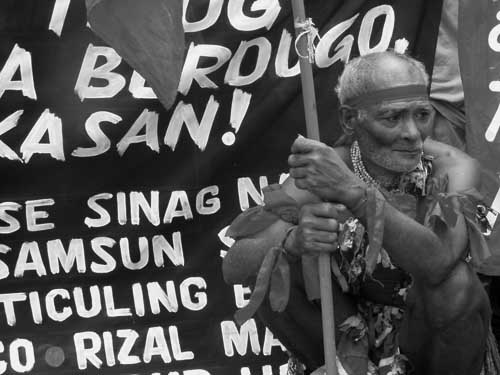 A tribe member prefers not to sit on the issues that confront his sector, often regarded as 'monitority'
 The Aetas put up a ritual called 'talbeg' where they butchered a pig to denounce the spate of killings that has already claimed 725 lives. At least 72 have been killed belonging to indigenous tribes
 Aeta women are warriors too, coming to the protest to fight destructive development projects...
 ...And kids too
 Straight from Zambales, Aetas picket the government's environment department
 Peering through a gate, this Aeta kid had seen the excesses of development projects to tribes at early age
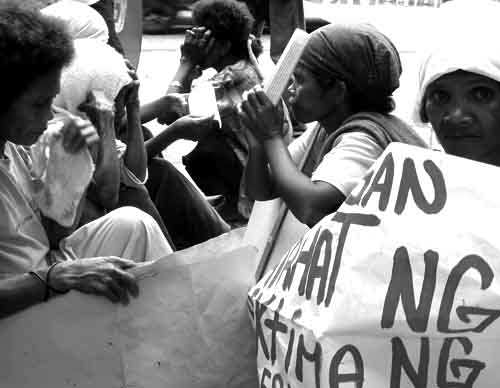 Now beyond the kitchen and their houses, these Aeta mothers also trooped to the protest
 The string instrument played by a mother, is known traditionally as "gitaha"
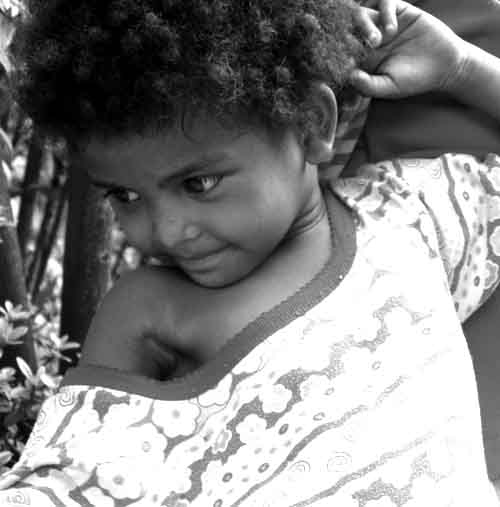 Shyly, youngsters, in tow by their mothers, join the protest
Monday, July 31, 2006
Kanor
Nung isang araw ko lang nalaman na kasama na sa listahan ng mga binura laban sa aktibismo si Kanor, isang kakilala.
Pangalawang tagapangulo siya ng Bayan-Pangasinan. Nabaril nung Pebrero pa at sa ospital na binawian ng buhay, sa gitna ng kumplikasyon. Lagpas limang buwan bago nakarating sakin ang balita.
Kung paano? Sinu-surveillance ng militar ang tagapangulo ng Bayan-Pangasinan, Fr. Terry. Lumabas sa ilang report sa internet na siya naman ngayon ang mainit sa mata ng militar sa Pangasinan, matapos na patayin si Apo Jose, tagapangulo ng kilusang magsasaka sa probinsya, at kanyang pangkalahatang kalihim.
Nung isang buwan ay dinukot si Jay, organisador ng Piston, sa Pangasinan. Inilabas siya kasama ng tatlong iba, matapos ang ilang araw na torture sa kamay ng militar sa Pampanga.
Iba pag kakilala ang biktima ng pamamaslang. Dati, tila istadistika lang sa dating ng mga pangalawang itinumba ng punglo. Ngayo'y oras-oras na nakikipagtitigan sa bala ang mga kasama. At ang pangamba sa buhay, ngayo'y ramdam ng kahit 'di personal na kakilala.
Nabubuhay ako sa panahong maraming dapat isulat, maraming humihingi ng hustisya dahil hindi sila magawaran ng umiiral na estado ng mga buhong at palalo. Kung nakakamatay lang ang mura.
Si Kuya Kanor, masayahin dahil tabatsoy. Eksentriko sa istilo ng pamumuhay. Pero tibak pa rin ang turing. Si Apo, matibay na sandigan ng mga magsasaka sa Pangasinan.
At si Fr. Terry, na pangalawang tatay ko sa turing. Nang batiin ko siya ng happy fathers' day nung nakaraang taon, ganito ang kanyang sinabi sa text, "Salamat po sa pagbati. Ingat lagi."
"Ingat lagi, mga kasama. Walang ibang salalayan ng ligtas na pagkilos kundi tayo at ating mga sarili...
Pangalawang tagapangulo siya ng Bayan-Pangasinan. Nabaril nung Pebrero pa at sa ospital na binawian ng buhay, sa gitna ng kumplikasyon. Lagpas limang buwan bago nakarating sakin ang balita.
Kung paano? Sinu-surveillance ng militar ang tagapangulo ng Bayan-Pangasinan, Fr. Terry. Lumabas sa ilang report sa internet na siya naman ngayon ang mainit sa mata ng militar sa Pangasinan, matapos na patayin si Apo Jose, tagapangulo ng kilusang magsasaka sa probinsya, at kanyang pangkalahatang kalihim.
Nung isang buwan ay dinukot si Jay, organisador ng Piston, sa Pangasinan. Inilabas siya kasama ng tatlong iba, matapos ang ilang araw na torture sa kamay ng militar sa Pampanga.
Iba pag kakilala ang biktima ng pamamaslang. Dati, tila istadistika lang sa dating ng mga pangalawang itinumba ng punglo. Ngayo'y oras-oras na nakikipagtitigan sa bala ang mga kasama. At ang pangamba sa buhay, ngayo'y ramdam ng kahit 'di personal na kakilala.
Nabubuhay ako sa panahong maraming dapat isulat, maraming humihingi ng hustisya dahil hindi sila magawaran ng umiiral na estado ng mga buhong at palalo. Kung nakakamatay lang ang mura.
Si Kuya Kanor, masayahin dahil tabatsoy. Eksentriko sa istilo ng pamumuhay. Pero tibak pa rin ang turing. Si Apo, matibay na sandigan ng mga magsasaka sa Pangasinan.
At si Fr. Terry, na pangalawang tatay ko sa turing. Nang batiin ko siya ng happy fathers' day nung nakaraang taon, ganito ang kanyang sinabi sa text, "Salamat po sa pagbati. Ingat lagi."
"Ingat lagi, mga kasama. Walang ibang salalayan ng ligtas na pagkilos kundi tayo at ating mga sarili...
Thursday, July 27, 2006
Ulan
Magkapatid bang ipinanganak ang luha at ulan? Nakikita ng mata ang pagtangis.
Panay ang ulan ngayon, dala ng bagyo. Masarap magkalipumpon sa kumot (parang bulaklak sa palad na tiniklop).
Ilang ulit ko ding tinititigan ang abuhin, magaygay nang alpombra ng bahay, bago maidlip. Ang ganitong pakiramdam, na nakatitig sa walang-pagsidlang malawak, ay ‘di katulad ng pagtanaw sa ilalim ng banging nakakalula.
Bagkus, para akong inaangat sa lapag.
Ilang araw nang umuulan. Mahangin, malamig at masarap sa lahat ang magkape. (At manuod ng sine (:
Ang lamig sa talampakan ng ulan. Magtampisaw!
Ang ulan, isang balabal na nagdudulot ng sakit-sakit sa lahat. Ang ubo at sipon ng isa’y hawa sa iba. Gayunpaman, masarap pa ring magkape, ng sama-sama.
Panay ang ulan ngayon, dala ng bagyo. Masarap magkalipumpon sa kumot (parang bulaklak sa palad na tiniklop).
Ilang ulit ko ding tinititigan ang abuhin, magaygay nang alpombra ng bahay, bago maidlip. Ang ganitong pakiramdam, na nakatitig sa walang-pagsidlang malawak, ay ‘di katulad ng pagtanaw sa ilalim ng banging nakakalula.
Bagkus, para akong inaangat sa lapag.
Ilang araw nang umuulan. Mahangin, malamig at masarap sa lahat ang magkape. (At manuod ng sine (:
Ang lamig sa talampakan ng ulan. Magtampisaw!
Ang ulan, isang balabal na nagdudulot ng sakit-sakit sa lahat. Ang ubo at sipon ng isa’y hawa sa iba. Gayunpaman, masarap pa ring magkape, ng sama-sama.
Subscribe to:
Posts (Atom)